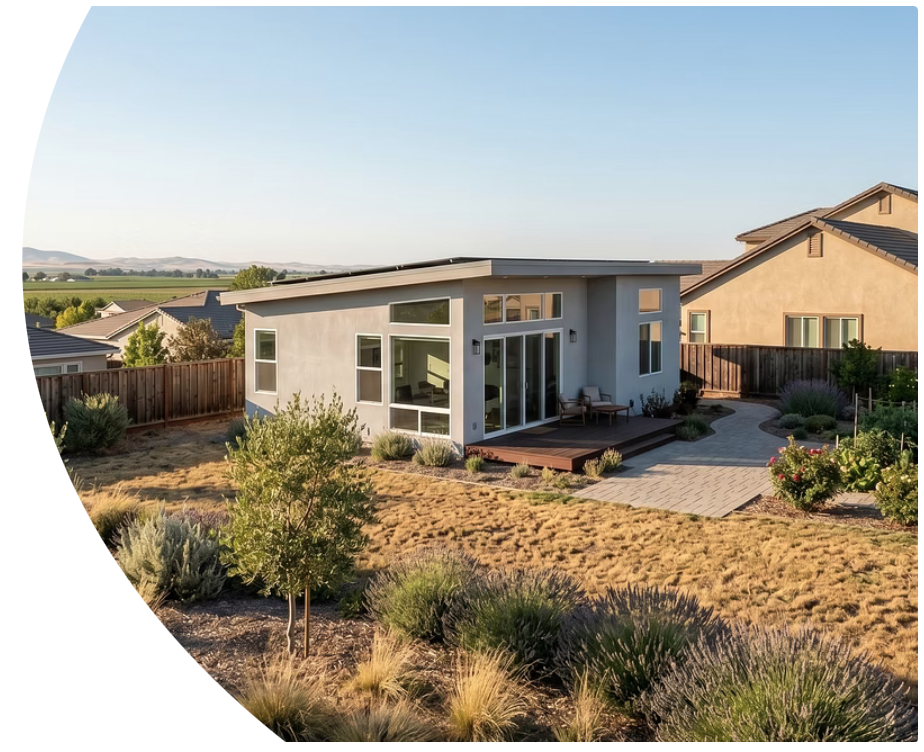
The Ultimate Guide to Building an ADU in California's Central Valley
That underused space in your backyard? It might be your most valuable asset. Accessory Dwelling Units — also called casitas, granny flats, or guest houses — let California homeowners add living space, generate rental income, and increase property value, all without moving.
Whether you're planning for aging parents, building a private home office, or creating long-term rental income, an ADU can pay for itself over time. Homes with an ADU typically appraise higher than those without one.
Check My Lot's Eligibility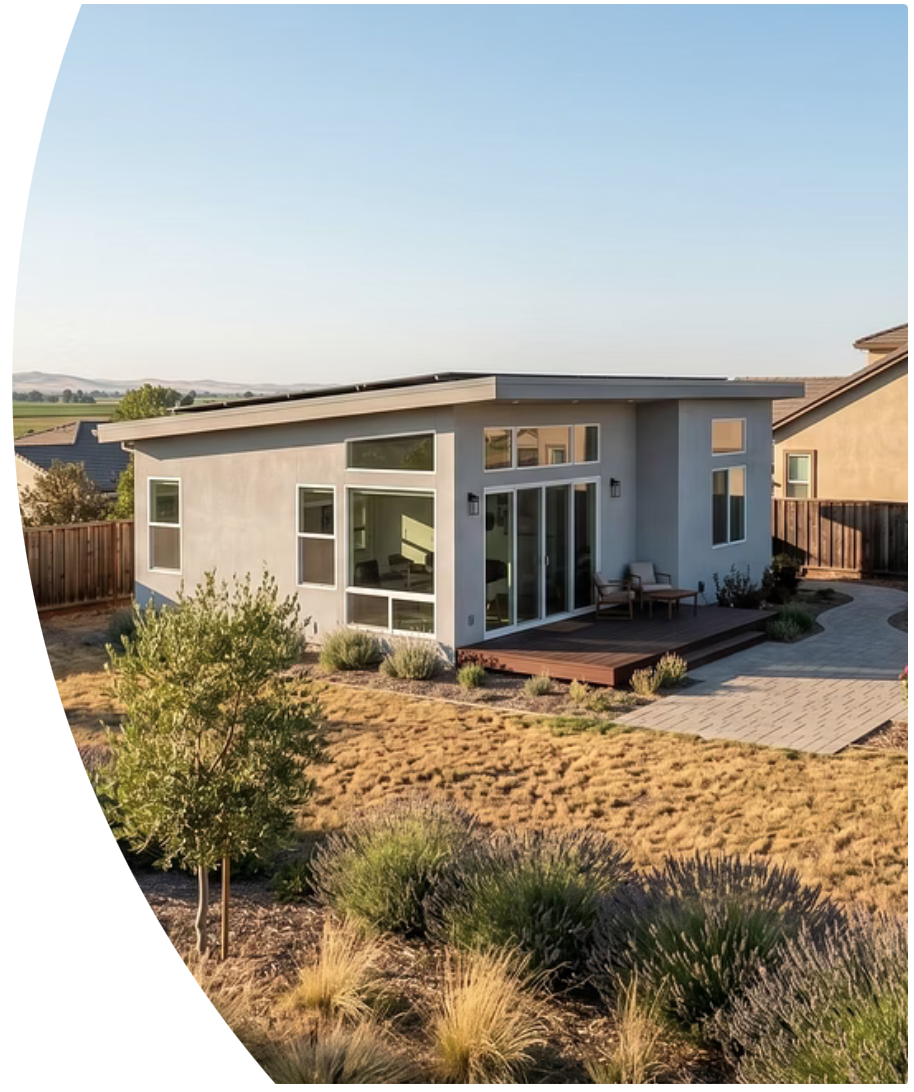
The My ADU Expert 4-Step Process
We've built our process around the realities of permitting: multiple departments, codes that change every year, and the occasional outsourced plan reviewer.
Step 1: Site Assessment
We evaluate your lot for feasibility of building an ADU — including identifying utility location, obstructions, and access requirements — before you commit to anything. This is where most surprises hide, and finding them early saves months later.
Step 2: Financing
We connect you with lenders who actually understand ADU projects: HELOCs, second mortgages, specialty construction loans, or your own savings. Getting pre-qualified early sets a realistic budget instead of a wishful one.
Step 3: Design
Choose a city pre-approved design to save weeks of plan check time and thousands in design fees, or work with our design team on a fully custom layout.
Step 4: Construction & Permitting
We coordinate Planning, Building, Engineering, Public Works, and the Fire Department on your behalf — and handle every inspection through your final occupancy permit. You build the dream; we build the reality.
What Can I Build on My Lot?
ADU Types
Detached
A standalone structure built from the ground up. State maximum: 1,200 sq ft.
Attached
Shares at least one wall, ceiling, or floor with your main house. Capped at 1,200 sq ft or 50% of your home's existing square footage, whichever is less.
Conversion
Convert an existing garage or basement into a livable unit. Same size cap as attached.
Junior ADU (JADU)
A small living space (under 500 square feet) built inside your existing home. It is usually a converted bedroom or garage, features a private exterior entrance, and can even share a bathroom with the main house.
The 4-Foot Rule
Across all California counties, the standard setback is 4 feet from side and rear property lines. We confirm other requirements for your specific city during the site assessment.
Pre-Approved Designs by City
Most cities in our service area offer pre-approved ADU plans ranging from 260 to 1,200 sq ft, in studio, one-bedroom, two-bedroom, and three-bedroom layouts. Choosing one of these can shave weeks off your permit timeline and skip certain architectural design requirements. We help you match the right pre-approved plan to your lot — or design custom for odd-shaped lots or specific needs.
How Much Does an ADU Cost?
Ballpark pricing runs $200 to $400 per square foot, which puts a typical 750 sq. ft. one-bedroom ADU between $150,000 and $300,000. Final costs vary based on the materials and finishes you choose.
Typical size range for an ADU
One-bedroom unit — the most popular ADU size
Full-project-cost for a typical 750 sq ft one-bedroom ADU
The Biggest Cost Variables
Sewer vs. Septic
Rural lots that need a new septic system run substantially higher.
Power
No nearby transformer? Bringing in a separate meter can add costs.
Material Finishes
This is where price-per-square-foot really moves.
Site Conditions
Grading, tree removal, and underground obstructions add up fast.
How Long Does an ADU Take to Build?
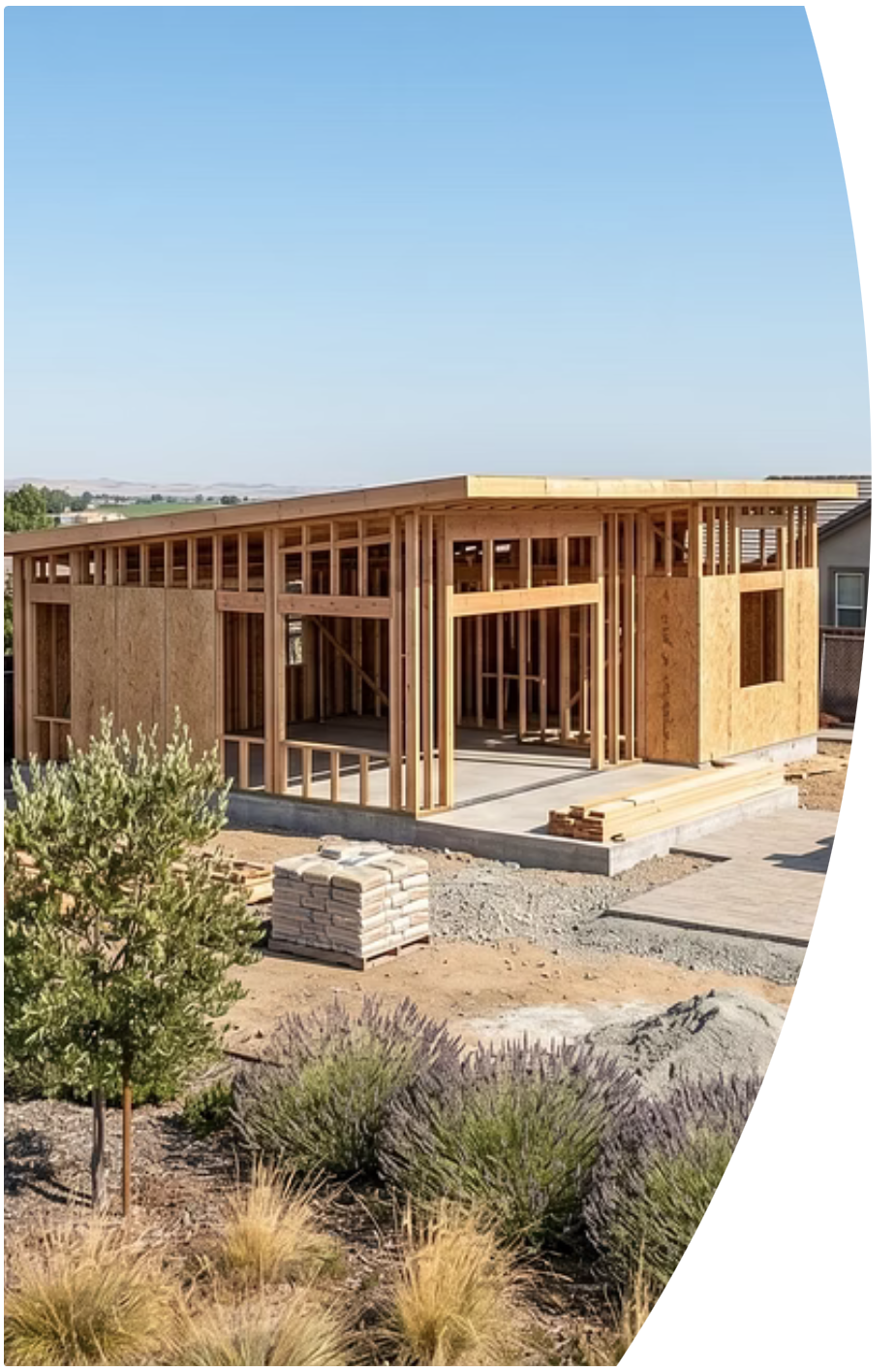
From first conversation to move-in day, expect 10 to 19 months total. Most homeowners are surprised by how much of the timeline happens before a single shovel hits the ground. That's why we move efficiently through assessment, design, and permitting — so you're not waiting on the wait.
Plans
2 weeks to 2 months
Faster with pre-approved designs
Permits
1 to 3 months
Multi-department review and coordination
Construction
6 to 12 months
From groundbreak to occupancy permit
Frequently Asked Questions
Everything California homeowners ask before breaking ground.
How much does an ADU cost to build?
Expect $200 to $400 per square foot. A 750 sq ft ADU typically runs $150,000 to $300,000. Final cost depends on site conditions, material finishes, and utility connections.
How long does the entire ADU process take?
About 10 to 19 months from first conversation to occupancy. Pre-approved designs and clean site conditions move things along faster.
Do I need to install solar panels on my ADU?
Solar is generally required for new, detached ADUs built with traditional wood framing. However, you are often exempt if your existing home already has solar panels or if you are building an attached unit, a conversion, or a modular home. Other exemptions include systems under 1.8 kW, lots with limited solar access, and fire-rebuilds in declared emergency areas.
Are fire sprinklers required for an ADU?
Only if your main house already has them, and only for attached ADUs. If your existing home has no sprinkler system, neither does your ADU. Local rules can vary.
Can my HOA block me from building an ADU?
No. California state law prevents HOAs and CC&Rs from outright denying an ADU. They can still set rules around common areas and shared facilities, so review your CC&Rs before finalizing your site plan.
Are there parking requirements?
There are no specific parking requirements for most ADU projects. Local jurisdictions may have additional rules, which we verify during your site assessment.
How do utility connections work?
You can usually tap into existing sewer and water lines on your property. Detached ADUs typically need their own power meter; attached units can share power if your existing panel has spare capacity. Most ADUs we build are 100% electric — running a new gas line is rarely worth the cost.
What if I have a septic system instead of city sewer?
This is where rural lots get tricky. Existing septic systems are usually sized for the original home only. A new detached ADU typically requires a new septic system, which means your lot needs room for both. We assess septic capacity and placement during your site visit before you commit to a design.
Can I build multiple ADUs on the same lot?
In some cases, yes. You are often allowed to have both a detached ADU and a conversion (and a JADU) on the same lot. The rules get specific depending on whether you are building from scratch or converting an existing space like a garage, but most homeowners can successfully add multiple units as long as they meet local size and setback requirements.
What permits do I need?
Every ADU requires a permit, regardless of size or type. The application is reviewed by the Planning, Building, Engineering, Public Works, and Fire departments. We handle the entire submittal, correction, and re-submittal process for you.
Why Central Valley Homeowners Trust My ADU Expert
Tracy-based licensed contractor (CSLB #1128150) serving San Joaquin and Stanislaus counties.
Local
Central Valley licensed contractor (CSLB #1128150) serving San Joaquin, Stanislaus, and Alameda counties. We know your neighborhood, your city's planning department, and your inspector by name.
Experienced
Years of navigating Planning, Building, Engineering, and Public Works across most cities in the region — we know which department can get backlogged and what to do to move things forward.
Transparent
We tell you what your project will actually cost, what it will actually take, and what the realistic timeline looks like. No surprises after the contract is signed.
Areas We Serve
We build ADUs for homeowners across San Joaquin, Stanislaus, and Alameda counties. Don't see your city? Call us — we likely serve your area.
San Joaquin County
Stanislaus County
Alameda County
Ready to Turn Your Backyard Into an Asset?
Find out what's possible on your lot in under two minutes.
Check My Lot's EligibilityPrefer to talk to a person? Call 209-800-9044 or visit MyAduExpert.com.